
Would that we trust God

Posted on: 18 June 2026 by Richard Worsley
Posted in: [Creation and World History]  [Cosmology] 

Would that we trust God

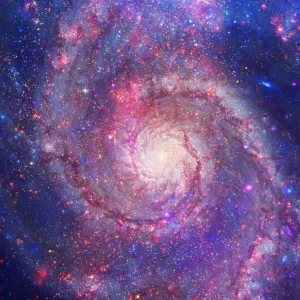
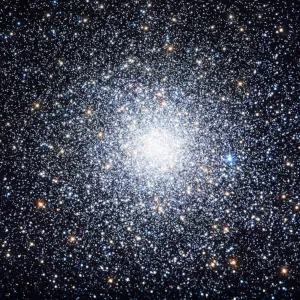
This video introduces an article about star clusters in the galaxies of the universe. These are generally accepted by the scientific community as being billions of years old, but it has been observed that these each rotate on an axis as a complete entity. The article is quite technical in its explanation and reasoning, but basically, the fact that such rotation occurs, is not consistent with billions of years, but rather with a much younger age. Whilst pointing out that he does not want to be over critical of the scientific community, Richard points out that it is nevertheless not equipped to prove the origins of the universe. Would that we trust God!


Go to Post
 

Jupiter's Youthful Moons

Posted on: 17 June 2026 by Richard Worsley
Posted in: [Creation and World History]  [Cosmology] 

Jupiter's Youthful Moons

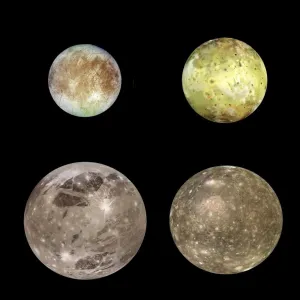
Jupiter's four largest moons (discovered by Galileo) are (in the diagram) Europa (top left), Io (top right), Ganymede (bottom right) and Callisto (bottom right). Research has shown the presence of geological activity in these moons, such as heated cores, volcanic activity and (in one instance) a magnetic field. The article explains how such findings are consistent with a recent creation, rather than a history of billions of years.


Go to Post
 

Where are the Population III Galaxies Needed for the Big Bang Theory?

Posted on: 11 June 2026 by Richard Worsley
Posted in: [Creation and World History]  [Cosmology] 

Where are the Population III Galaxies Needed for the Big Bang Theory?

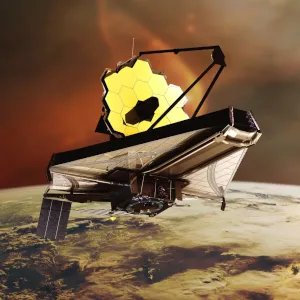
Population III is the term given to supposed first generation stars/galaxies, where the stars are made up from only the three lightest elements (hydrogen, helium and a trace amout of lithium). According to the Big Bang Theory, stars begin life in this form, after which explosions within their cores will subsequently cause the formation of heavier elements, and this model is key to validity of the theory. Scientists have been desperate to find such stars in the universe, but all such efforts have so far failed, previously with the Hubble Telescope and more recently with the James Webb Telescope. The presence of such primitve stars would not rule out the possibility of God as creator, but their absence (which is what we see) causes the Big Bang Theory to be very seriously undermined. We should not even try and argue that God used a big bang, as the evidence for it is simply not there.


Go to Post
 

The Emperor's New Clothes or this Parrot is Dead!

Posted on: 05 June 2026 by Richard Worsley
Posted in: [Creation and World History]  [Cosmology] 

The Emperor's New Clothes or this Parrot is Dead!

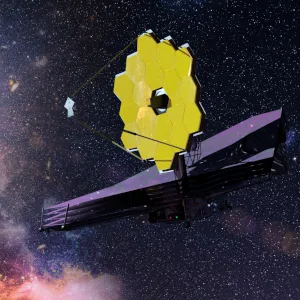
The title of this post may seem intruiging, but we will leave it to Richard to explain in the course of the video. We have here a link to yet another article about the findings from the James Webb Telescope. When the telescope was launched, it was expected to find galaxies at different stages of development, and yet what we have found, is that all stars and galaxies are of a mature nature, thus seriously putting to death the undermining principles of the Big Bang Theory. All the evidence points to creation ex nihilo and hence the work of a creator God, and yet sadly this is not being acknowledged in the media or in academic circles.


Go to Post
 

Big Bang Theory Undermined by the JWT

Posted on: 22 May 2026 by Richard Worsley
Posted in: [Creation and World History]  [Cosmology] 

Big Bang Theory Undermined by the James Webb Telescope

In this video, Richard re-covers material from the previous post JWT and the Shaking of the Nations, and the linked article here is also from the other post. We are once again reminded of how the findings of the JWT have been a complete surprise to scientists, revealing the presence only of mature galaxies, totally supporting the idea of creation ex nihilo. All efforts to promote the Bing Bang Theory have so far ended with insufficient evidence. Richard then goes on to remind us of the vastness of the universe, and how cosmology is a huge subject that we cannot begin to fully comprehend, and how in humility we need to see the greatness of God in all of this.


Go to Post
 

JWT and the Shaking of the Nations

Posted on: 26 April 2026 by Richard Worsley
Posted in: [Creation and World History]  [Cosmology] 

JWT and the Shaking of the Nations

In this video (with 4 related articles), Richard tells us how, when the James Webb Telescope went into operation with the ability to see further into space than ever before, it was expected to find younger evolving galaxies. This has been found not to be the case, with all observed galaxies being of a mature nature. This has cause concern to the scientific community, which still promotes the Big Bang Theory as being true. This observation, along with other evidence for a young earth and universe, should all the more be pointing to the truth of the God of the Bible, and this cannot be more urgent than today, when we see the shaking of the nations through current world events.


Go to Post
 

A Young Saturn

Posted on: 07 February 2026 by Richard Worsley
Posted in: [Creation and World History]  [Cosmology] 

A Young Saturn

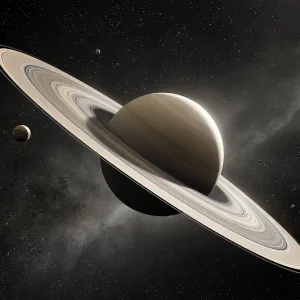
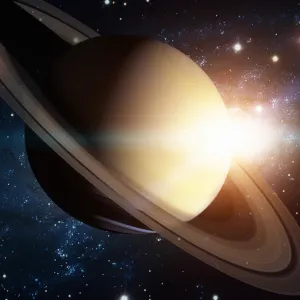
In this video, Richard introduces an article about the voyage of the Cassini space probe and results returned from Saturn and its surrounding systems. The rings and moons show properties that are simply not consistent with an age of billions of years. The theoretical maximum age of these systems would be around 100 million years, which itself is very small in comparison to the traditional billions-of-years model of the age of the universe. The whole subject of the universe is so vast, that any theory of its origins from a scientific point of view, are at the best going to be speculative. We do however have the Word of God, which have seen in other articles, is backed up by a pentiful amount of evidence.


Go to Post
 

The Universe and the Bible

Posted on: 07 November 2025 by Richard Worsley
Posted in: [Creation and World History]  [Cosmology] 

The Universe and the Bible

In this video, Richard introduces an article that addresses the question of what the Bible has to say about astronomy, giving examples of how it speaks of the earth and the universe. Not least is the matter of the age of the universe, which we are told came into being during the six days of creation, as opposed to the normally accepted billions of years paradigm. As we are able to look further into space with modern telescopes, the evidence suggests that all galaxies are mature, as opposed to there being some that are still evolving. The article then goes on to cite four lines of evidence that the universe is in fact young:

  1. Recession of the moon.
  2. Magnetice fields of planets.
  3. Comets.
  4. Spiral galaxies.


Go to Post
 

Earth's magnetic field - Evidence for a Recent Creation

Posted on: 12 October 2025 by Richard Worsley
Posted in: [Creation and World History]  [Cosmology] 

Earth's magnetic field - Evidence for a Recent Creation

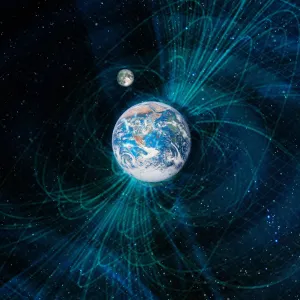
This is the second of Richard's videos in his series on cosmology, and looks at the subject of the earth's magnetic field. Research shows the magnetic field is declining at a steady rate, and if this is extrapolated back, its maximum possible age is only 6-10 thousand years, as it is simply too strong to go back billions of years. Furthermore, other planets and moons in the solar system have magnetic fields, which are likewise too strong to be billions of years old. This provides yet more evidence in favour of a recent creation.


Go to Post
 

Too Hot to be Old - a Recently Created Solar System

Posted on: 11 October 2025 by Richard Worsley
Posted in: [Creation and World History]  [Cosmology] 

Too Hot to be Old - a Recently Created Solar System

This is the first of a series of videos which Richard is going to do in the field of cosmology. This video and the associated article look at the subject of our solar system. If the universe were 4.6 billion years old, as is generally claimed, we would expect the various planets and moons to have completely cooled down after such a long period of time. With advances in space exploration, recent findings have in fact discovered the very opposite, with many of the planets and their moons actively showing signs of heat and volcanic activity. This fits far better with the idea of a recent creation, rather than a long history of billions of years.


Go to Post