

Older Posts Newer Posts

Signs of the Second Coming

Posted on: 29 April 2026 by Richard Worsley
Posted in: [Creation and World History]  [Theology / Bible Study] 

Signs of the Second Coming

In this video, Richard starts by summarising some of the signs of end times, as covered in more detail by the blog posts in the first ten days of this year. He then goes on to draw an analogy with a train journey from Liverpool to London (a journey that he frequently travels). Imagine that you are on that journey, but without any knowledge of the travel times involved. You go through various cities wondering if this is it, but on approaching London, it becomes obvious that this really is your destination, simply because the city is so much larger than anywhere that has gone before. So it is with the end times and Second Coming. Biblical prophecy gives no clear indication of timescales, and consequently at times throughout church history, believers have come under the impression that the end may be soon. Today however, the signs are so much greater than ever before, like the approach to London on that train journey. Surely, He is coming soon!




Go to Post
 

Growing Up Godless

Posted on: 28 April 2026 by Richard Worsley
Posted in: [Creation and World History]  [Theology / Bible Study] 

Growing Up Godless

These two videos and articles are inspired by the book "Growing up Godless" by Anna Strhan and Rachael Shillitoe. The concerns discussed here relate to the way that children are increasingly being raised in a humanistic and non-religious/Christian culture. By the end of Year 6, children will typically believe that evolution is true, and that creation, and even Christianity itself, are a myth. Children are being raised to embrace humanistic views of rationality, autonomy, respect and equality, and sadly, importance is no longer placed on the Christian perspective of these things.


Go to Post
 

Are you thirsty?

Posted on: 06 March 2026 by Richard Worsley
Posted in: [Creation and World History]  [Theology / Bible Study] 

How thirsty are you? (a reflection on the crises of our modern world)

In this video and article, we are asked the question "How thirsty are you?". Jesus spoke about rivers of living waters in connection with the work of the Holy Spirit in us. In the world today, we have been facing an increasing number of crises, particularly in recent years. Could God be using this to encourage people to become thirsty and realise their need of Him? In the time of Elijah, it took 3.5 years of drought to make people thirsty enough to realise their need of the one true God. Is God saying to us today "Are you thirsty for me, and are you in a position to listen to I have to say to you?".


Go to Post
 

A Day as a Thousand Years

Posted on: 05 March 2026 by Richard Worsley
Posted in: [Creation and World History]  [Theology / Bible Study] 

A Day as a Thousand Years (2 Peter 3:8)

This verse in 2 Peter 3 (quoted from Psalm 90) says that with God, a day is like a thousand years. This idea has been taken up by various ones to create a parallel between millennia of history and the days of creation. The belief was held by early church fathers, and possibly also by the reformers, namely that it would relate to 6000 years of history, followed by the millennial reign of Jesus on earth, as told in Revelation (representing day 7, the Sabbath). Even Jewish writers have suggested the idea of 6000 years of history, followed by the millennial reign of Messiah. Whilst this is not a widely held doctrine today, it is still worthy of our consideration alongside other teachings about the end times.


Go to Post
 

Is 2026 an Important Year?

Posted on: 04 March 2026 by Richard Worsley
Posted in: [Creation and World History]  [Theology / Bible Study] 

Is 2026 an Important Year?

This video and article talk about the challenge that we face as Christians in the light of the increase in the humanist agenda that we are seeing within our modern culture. This is particularly seen in the rejection of God as creator and also in the promotion of gender ideology, which together can be seen as a fulfilment of what we read in Romans 1. Though we may have have seen measures of restraint in some areas during 2025, nevertheless 2026 poses fresh dangers that cannot be underestimated. Whilst every new year has it own significance, as we rapidly approach the Second Coming, as would clearly seem to be the case, the need for us as Christians to pray, becomes increasingly urgent.


Go to Post
 

Let the Nations Be Glad?

Posted on: 03 March 2026 by Richard Worsley
Posted in: [Creation and World History]  [Theology / Bible Study] 

Let the Nations Be Glad?

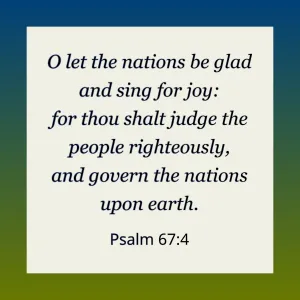
The title of this video and article was inspired by a modern worship song entitled 'Let the nations be glad'. Sadly, such a notion can give rise to unrealistic expectations, because how can all the nations be glad when we are living in a world that is under God's judgement? The title itself is in fact scriptural, being found in Psalm 67 verse 4, but is in that context linked to God's judgement and righteous rule. Yes, the whole world will certainly rejoice when Jesus comes back and estalishes his millenial rule, but what about now? If we were to see mass repentance and acceptance of God's ways, then this could certainly become more of a reality in the present age.


Go to Post
 

Personal Holiness - One of the Privileges of the New Covenant?

Posted on: 02 March 2026 by Richard Worsley
Posted in: [Creation and World History]  [Theology / Bible Study] 

Personal Holiness - One of the Privileges of the New Covenant?

In this video and article, Richard talks about personal holiness, a privelege that we have, over and above what was experienced by the Old Testamenent saints. Holiness can be:

  • Imputed - given as part of our right as children of God.
  • Imparted - something to be worked out in the process of holy living.

Also, how we live out our lives can be expressed in one of two ways:

  • A constant struggle against sin and the old nature.
  • Living in victory over sin.

The truth is going to lie somewhere in between these two extremes, but we need to look to the testimony of saints for whom personal holiness was an important factor, and amongst other things, this can be found in many of the traditional hymns.


Go to Post
 

The Key of Knowledge - will we use it?

Posted on: 28 February 2026 by Richard Worsley
Posted in: [Creation and World History]  [Theology / Bible Study] 

The Key of Knowledge - will we use it?

In this video and article, Richard looks at the way in which, at the time of Jesus, the religious leaders of the day had the key of knowledge, because they were the ones who had expertise in the Scriptures and the Law. In spite of this, they failed to recognise Jesus as Messiah, even though His position should have been obvious to them through the various miracles and fulfilled prophecies. Their refusal to acknowedge these things ultimately led to the destruction on the Jewish nation 40 years later. Today we are faced with a similar scenario, in terms of both modern miracles and the end-time fulfilment of prophecy. The evidence for these things is overwhelmingly great, and yet the question arises as to how the academic community and other experts and going to handle the key of knowledge that is in their possession. It can result in the salvation or destruction of a nation.


Go to Post
 

The Church of the North, South, East and West

Posted on: 25 February 2026 by Richard Worsley
Posted in: [Creation and World History]  [Theology / Bible Study] 

The Church of the North, South, East and West

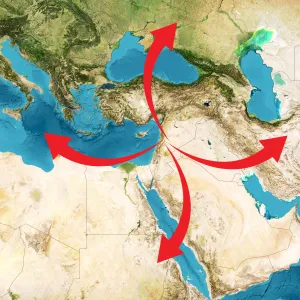
This video and article are based on a talk given as part of a lesson at school, and talks about how the church spread in all four directions during the first millenium of its existence.


Go to Post
 

Some Key Points from 4th Century Church History

Posted on: 24 February 2026 by Richard Worsley
Posted in: [Creation and World History]  [Theology / Bible Study] 

Key Points from 4th Century Church History

This post covers two of Richard's videos and their related articles, which are individually entitled:

  1. Two positive outcomes from Constantine's legalising Christianity.
  2. The Received Text (Textus Receptus).

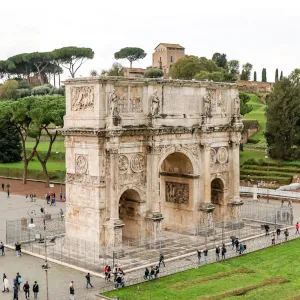
They cover an important point in church history during the 4th Century AD, when certain key things were established, including the Nicene creed, the canon of Scripture, and the Textus Receptus (the texts later used as the basis for the King James Bible).

(Image - The Arch of Constantine, Rome)

Go to Post
 
Older Posts Newer Posts